

Furnish development from real textile streams
We work with genuine post-consumer and post-industrial material, not idealised laboratory fibre — because sortation quality, blend content and contamination are the actual engineering problem.
● Recycled textile fibre · Packaging paper · Lemi · Finland
Most of the world's discarded textiles are burned or landfilled — not because the fibre is worthless, but because textile-to-textile recycling can absorb only a fraction of the stream, and everything below that quality bar has had nowhere industrial to go. Textile-to-paper recycling explores a second route: converting cellulose-rich textile waste — cotton and cotton-blend garments, cutting scraps, production side-streams — into packaging-grade paper.
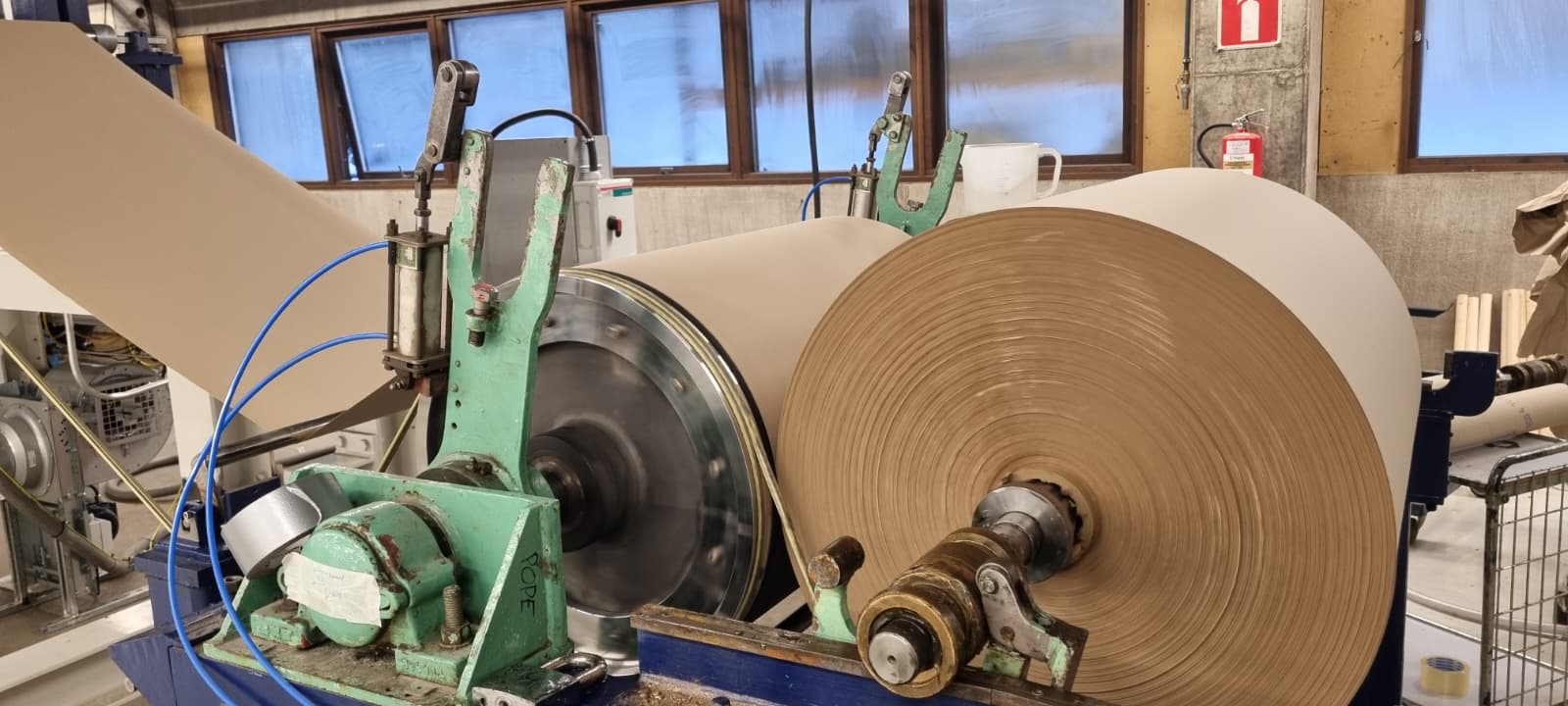
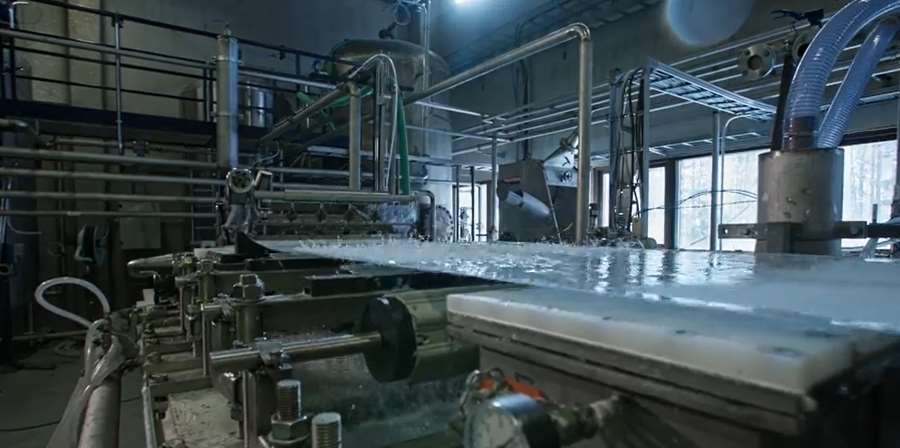
This is one of our core development domains. At our pilot facility in Lemi, Finland, recycled textile fibre has been processed into machine-made paper on a full fourdrinier pilot paper machine — trial rolls of textile-fibre paper, produced, tested and documented under NDA.
WHY · 01
Cotton is cellulose — the same polymer papermaking is built on, in a longer, stronger fibre form than most wood pulps. Textile fibre entering a paper furnish can contribute strength and character that recycled paper alone cannot, and it upgrades a waste stream with heavily negative disposal economics into a packaging raw material.
For brands, it can convert a liability — unsold goods, returns, cutting waste — into demonstrable circularity: packaging that visibly carries the fibre of the product stream it protects.
The catch is that garments are not designed to be repulped. Blends, elastane, dyes, finishes and sewn-in hardware all stand between a bale of textiles and a runnable paper furnish. Solving that — reliably, at pilot scale — is precisely the development work this facility exists for.
WHAT WE DO · 02
We work with genuine post-consumer and post-industrial material, not idealised laboratory fibre — because sortation quality, blend content and contamination are the actual engineering problem.
Practical textile-fibre papers are usually blends: textile fibre for strength and identity, recycled paper fibre (OCC) for cost and runnability. We develop blend furnishes across that spectrum to hit target specifications.
Full machine trials — forming, pressing, drying, reeling — producing packaging-grade paper in roll form, with process parameters recorded run by run.
Strength, structural and furnish characterisation in the on-site laboratory, delivered as a trial report your technical and procurement teams can qualify against.
Machine and lab specifications are on the equipment page. Trial structure is described under contract pilot trials.
WHO · 03
Fashion and apparel brands with unsellable inventory and take-back streams; textile sorters and recyclers holding fractions below textile-to-textile quality; packaging producers looking for differentiated recycled furnishes; and technology developers whose fibre processes need an industrial validation site. Client programs are anonymised by default and typically run under NDA — engagement models are described under access tiers.
QUESTIONS · 04
Yes — textile fibre has been run into machine-made roll paper on our pilot fourdrinier, not just laboratory handsheets. The honest qualifier is that textile-to-paper is a development discipline, not an off-the-shelf process: each textile stream differs in composition and contamination, and each target paper grade needs its own furnish and machine settings. That's why the route to a textile-fibre paper product runs through pilot trials rather than a datasheet.
Fibre-to-fibre usually refers to textile-to-textile: recovered garments spun back into yarn and woven into new textile. Textile-to-paper is the parallel route for the (much larger) fraction that textile-to-textile can't absorb — cotton-rich streams turned into packaging paper.
CONTACT
Tell us what the material is and what you want it to become.